MIYAKE Takeo
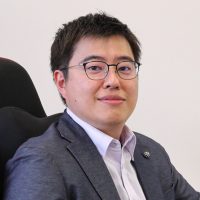
MIYAKE Takeo
Dept. of Electronics and Physical Systems (interlocking prof.) Grad. School of Information, Production, and Systems
Specialization:Bioiontronics
Education
B.S., Electrical Engineering (Waseda University Science and Engineering Department)
M.S. Nanoscience & Nano engineering (Waseda University Nanoscience & Nanoengineering)
PhD, Nanoscience & Nano engineering (Waseda University Nanoscience & Nanoengineering)
Career
2006–2008: Research Fellowships for Young Scientists, Doctoral course students, JSPS
2008–2009: Research Fellowships for Young Scientists, Postdoc, JSPS
2008–2010: Visiting Researcher (concurrent appointment), Maeda Bioengineering Laboratory,
RIKEN, Japan
2009–2014: Assistant Professor, Department of Bioengineering and Robotics, Tohoku University
2009–2014: Visiting Researcher, Nanotube Research Center, National Institute of Advanced Industrial Science and Technology (AIST), Japan
2014–2016: Acting Instructor, Material Science and Engineering, University of Washington, USA
2015–2016: Research Associate, Department of Electrical Engineering, University of California, Santa Cruz, USA
2016–2021: Associate Professor, Graduate School of Information, Production and System, Waseda University
2021–Present: Professor, Graduate School of Information Production and Systems, Waseda University
2023–2026: Senior Science and Technology Policy Fellow for Bio Secretariat of the Science, Technology and Innovation Policy, Cabinet Office, Government of Japan
2026–Present: Professor (Concurrent Appointment), Department of Electronics and Physical Systems, School of Fundamental Science and Engineering, Waseda University
2026–Present: Professor (Concurrent Appointment), Graduate School of Fundamental Science and Engineering, Faculty of Science and Engineering, Waseda University, Waseda University
Research
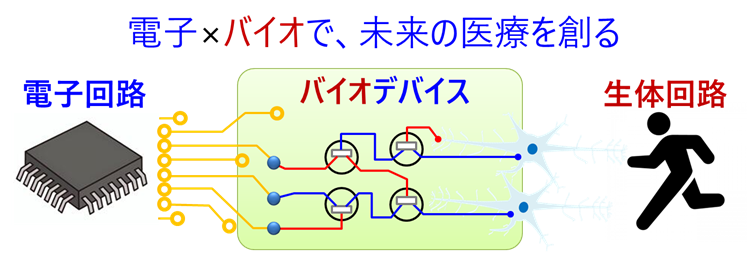
Miyake Lab develops cutting-edge bio-devices that support the future of healthcare and manufacturing.
[Bio-Manufacturing (Smart Cells)]
We are developing ultra-fine nanoscale injectors capable of precisely delivering desired materials into cells and extracting materials from them. Using this technology, we engineer cells that can produce therapeutic compounds or serve as treatments for diseases. This research represents a frontier in biotechnology with significant potential for regenerative medicine and next-generation bioindustries.
[Medical Devices (Smart Contact Lenses)]
Leveraging advanced semiconductor technologies, we are developing thin, lightweight, and highly comfortable contact lens devices. These smart lenses are expected to contribute to the prevention, diagnosis, and treatment of vision-threatening diseases through drug delivery and health monitoring. In addition, they have the potential to serve as future platforms for augmented reality (AR) displays and other innovative applications that will benefit society.